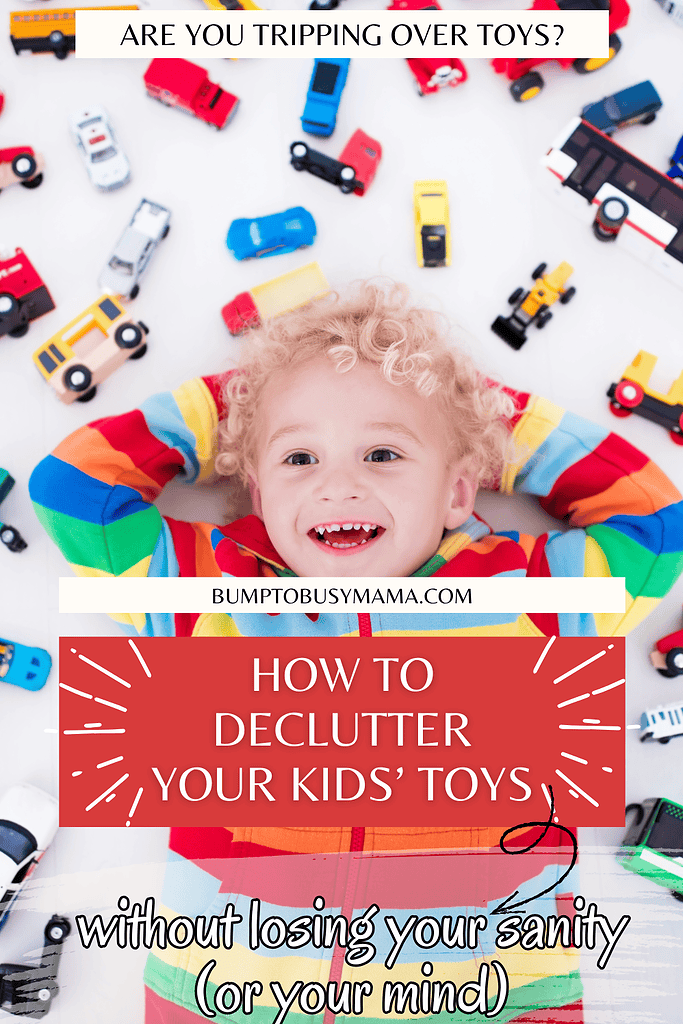
I don’t know when it happened exactly, but one day I looked around our living room and realized we had somehow become the storage facility for every toy ever created.
Table of Contents
Blocks. Cars. Loose puzzle pieces. Plastic doll shoes and random legos everywhere.
The worst part?
My kids weren’t even playing with most of it.
They were always bored somehow unless they were entertained by a screen, all while being surrounded by hundreds (realistically, thousands) of dollars worth of toys.
Our house felt chaotic and we were all stressed and showing it in our own ways.
If you’ve ever tried to declutter toys while stepping over a sea of them, then you understand the feeling. You’re angry about the mess with no idea how to fix it, and you’re mentally searching for anyone to blame for the state your home is in.
Here’s what I’ve learned…
Decluttering toys doesn’t have to be miserable. It doesn’t have to take weeks.
It doesn’t have to turn you into the bad guy.
With a few simple strategies, you can finally get rid of the toy clutter, create a calmer home, and help your kids actually enjoy what they have.
This is the step-by-step process I used. If it can work in my home, trust me, it can work just about anywhere!
Related Posts:
8 Absolute Musts on our diaper bag checklist
7 genius playroom organization tips guaranteed to make your whole family happy
50 wildly wise baby organization ideas | nursery + house
Why Kids Actually Play More When They Have Less
Let’s get this out of the way first because it will help with the guilt you’ll feel during the process.
Every parent has seen this happen.
Your kids beg for a new toy. You finally cave. They play with it for 5 minutes before it becomes just another toy you’re begging them to clean up at the end of the day.
The truth that stores don’t want you to know is that kids don’t need more toys.
They need less stuff, fewer distractions, and more space to use their imaginations.
Kids are naturally creative and curious, but too many toys overwhelm their senses and shut down their creativity.
When there’s less clutter, they can actually focus on one thing at a time instead of getting distracted by the next shiny object.
Less toys equals more play.
Less cleanup equals less nagging.
Less clutter equals a calmer home for the whole family to enjoy.
Step 1: Do the First Round Without the Kids (Trust me on this…)
Listen, I am all about involving your kids in the decluttering process.
Not only does it give them ownership over their own toys, but it teaches them really valuable lessons they’ll need later in life.
For now though, you want to handle the intial parts on your own.
This is the step where we’ll remove the easiest things. The broken toys, games with missing pieces, etc.
If your kids are around, suddenly everything becomes the most important toy they have ever owned.
Even the Happy Meal toy they got last year that was wedged between the bed and the wall.
Here’s what to do instead…
While they’re outside playing, at their grandparents’ house, or taking a nap, grab a big trash bag and do a quick sweep.
Remove:
- Any broken toys
- Anything missing pieces
- Junk toys from birthday party goody bags, kids’ meal toys, etc.
- Duplicates (how many unclothed Barbie dolls with knotted hair do we really need?)
If it’s broken, it goes in the trash. If it’s still usable, it goes in a donation box.
Don’t overthink it.
Just start with the obvious clutter that they won’t miss and you’ll already feel like you’ve made a huge dent in your mess!
Step 2: Choose “Toy Zones” in Your Home
Part of the reason toys take over the entire house is that we let them.
Toys are like glitter. If you don’t contain it, it ends up everywhere.
Pick a few areas in your home where toys are allowed to live. Think a toy box in the living room (or a storage ottoman, this works great for us!), a bin where all art supplies are, a shelf in the living room for their favorite board games.
Also be sure to set some parameters in their bedrooms. This is so important.
Just because it’s a kids’ room doesn’t mean it needs to look like a toy store threw up in there.
Add a few cube organizers and a toy box for larger toys.
Make a new rule that no toy can live on the floor. It HAS to have a place.
Now every toy that you keep has to be able to fit into one of these areas. This rule alone will help you to naturally cut down how many toys you keep.
Step 3: Involve the Kids When It Makes Sense
Once the clutter is drastically reduced, then I think it’s safe to bring in the kids.
This step is about teaching them generosity, prioritizing what matters, and learning that it actually feels good to let go of things we no longer love.
Say things like “Which toys make you happy and which ones do you think you can live without.”
I like to avoid saying things like “Let’s choose toys to donate to kids that don’t have any” and similar super emotional statements.
Your kids would likely give their very favorite toy to a child that had nothing.
I try to make our decluttering sessions more about letting go of things that no longer serve them, instead of huge life lessons.
I want them to feel how freeing this is so they will hopefully learn to part with extra things before they weigh them down in the future.
Kids love helping to declutter when it feels empowering. That’s what we’re going for here!
Pro tip…If you have a sentimental kid, start with categories that aren’t emotional, like puzzles or board games. Save stuffed animals, dolls, action figures, etc for last.
Step 4: Use Simple Storage
This is where the magic happens.
Now you’re going to designate bins for each kind of toy. Cars, art supplies, blocks, dolls, etc.
Whatever your kids have that you want them to keep, make it fit into a category and find a realistically sized bin for that category.
You do not need a Pinterest-worth storage system for the remaining toys.
You need something that works.
Think about the areas of your home that you designated earlier as toy-friendly areas.
Use baskets that you already have on hand for areas like the living room. Clear bins and plastic containers work better in areas like the bedroom.
Make these containers your boundary going forward.
“It’s okay to keep all the dolls you want as long as they fit in this bin and the lid can close.”
This is HUGELY helpful when birthdays and holidays roll around.
Your kids will learn that when new toys come in, we have to choose a few to get rid of so the new toys can “fit.”
Now, my kids don’t even question this. In fact, they have started to declutter by themselves before asking for a new toy.
The other day, my daughter was pressuring us for yet another new Barbie doll. To prove she was serious about using her birthday money to purchase it, she chose 3 of her older Barbies to donate.
Your kids will learn this skill too!
Help your kids to declutter all of their toys down to whatever can comfortably fit in the bins you’ve provided.
This is where the magic really happens.
It’s great to part with all of the broken junk, it’s another thing entirely to watch your kids choose what is important to them and willingly let go of the rest!
Step 5: Start Toy Rotation
Do not skip this step.
Whatever you do. This is the key to making it all work.
Your kids shouldn’t have access to every toy they own at all times.
That’s a recipe for dumped bins and disaster to take over all over again.
Instead, take away about half of their toys.
In our house, we may leave out the doll house toys, the dress up clothes, and the stuffed animals while storing away the play food and Barbies.
When I notice our kids are starting to lose interest in the toys they have access to, we pack them up and bring in the others from our garage.
You would think we have introduced brand new toys every time we rotate.
Step 6: How to Stop This From Happening Again
If more toys keep coming in, nothing stays decluttered.
Birthdays and holidays will continue to happen. We can handle an influx of toys without losing all of our progress if we’re just prepared!
Before birthdays and holidays, be more intentional about telling loved ones what toys your kids would actually love to receive.
If you’re sure the favorite gifts are covered, you are free to get things for your kids that won’t add to your clutter.
Experience gifts and craft sets are great options.
When I was worried that my kids would feel slighted when they started getting less gifts for Christmas and birthdays, I started a new tradition that has changed everything.
Now, we set up a scavenger hunt for them to look for their gifts!
This makes opening gifts take much longer, keeps it exciting, and they don’t even notice that they’re getting less. In fact, it’s become the best part of birthdays and holidays!
Put a stop to the random toy purchases.
Now getting toys will be just for holidays and birthdays. Not just a random Thursday trip to Target.
Be diligent about protecting your peace when it comes to toys and you AND your children will be better off as a result!
Final Thoughts
Decluttering kids’ toys isn’t about being minimalist or having a Pinterest-perfect playroom.
It’s about peace.
It’s about creating a space where your kids can actually enjoy their toys instead of drowning in them.
It’s about protecting your time, your sanity, and your home from being taken over by tiny plastic pieces.
You don’t have to declutter perfectly to see the benefits, you just have to get started!
If I can do this, you can too!

Other Posts You May Like:
secrets to baby room organization
7 essential baby dresser organization tips that are life-changing
diy: 7 baby clothes ideas that are effective